
October 27, 2025
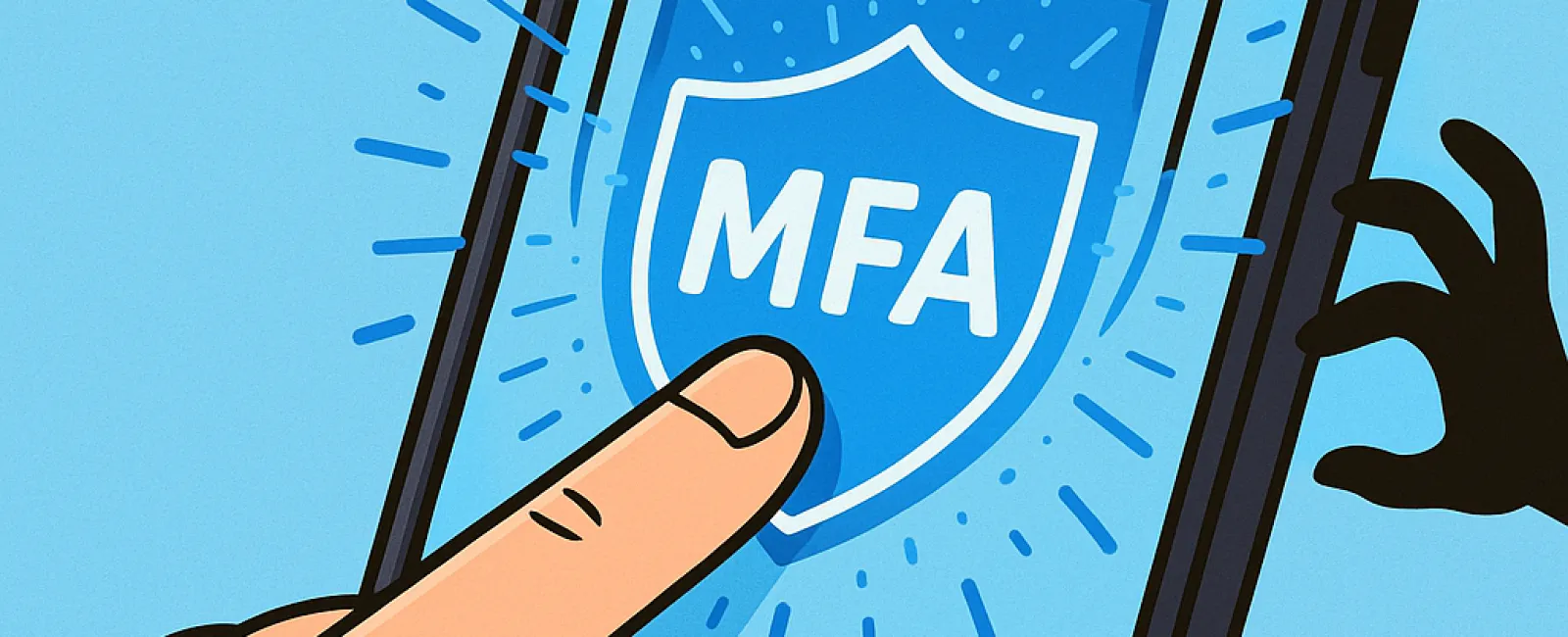
Just as you wouldn't drive without buckling your seat belt or leave your office door unlocked overnight, you shouldn't go online without enabling multifactor authentication (MFA).
MFA acts as a vital second barrier to secure your digital life. Instead of relying solely on passwords—which are vulnerable to theft, guessing, or phishing—MFA requires an additional verification step like a text message code, an authentication app, or a fingerprint scan. This means even if someone obtains your password, they still can't access your account without that extra layer.
How One Simple Step Enhances Your Security
Think of your password as your front door lock and MFA as the security system you activate before bed. While you might get by without it, wouldn't you prefer that backup layer of defense?
In essence, MFA adds a quick, additional step to confirm your identity at login. Terms like "two-step verification," "two-factor authentication," or "one-time password" all describe this extra confirmation. It protects sensitive info by requiring two or more forms of identity verification before granting access.
MFA can take various forms, including confirmation emails during account setup, bank security questions, texted codes, push notifications, or phone calls. Most of these require just a simple tap or entry of a code.
Real-World Benefits of MFA
On your end, MFA is quick and straightforward—just enter a code or hit approve. But for cybercriminals, it's a major obstacle. If someone attempts to log in without authorization, MFA notifies you and prompts for an additional code, alerting you to the breach and giving you a chance to update your password before your data can be compromised.
Moreover, MFA blocks unauthorized access even if a hacker tricks an employee into sharing login details. In fact, Microsoft's research shows enabling MFA reduces account compromise risks by over 99.2%, and by 99.99% for accounts with MFA fully enabled.
Essential Accounts to Protect with MFA
Make sure to activate MFA on your:
- Banking and financial applications
- Email and cloud storage services
- Social media platforms
- Work systems containing client or proprietary data
Setting up MFA is usually user-friendly. Many platforms include built-in MFA options—just pick the one that fits your needs and add it to your login process. Using an authenticator app can add an extra layer of security for your team.
In conclusion, enabling MFA is a fast, cost-free method to block most hacking attempts. Spending a few minutes now to implement it can spare you from extensive data breaches and costly recovery efforts later.
The easiest way to enable MFA is to reach out to your IT provider. A skilled Managed Service Provider (MSP) can make setup seamless. If you need cybersecurity expertise, click here or call us at (951) 405-6873 to schedule a 15-Minute Discovery Call consultation with our team.


